Kalonji (Nigella Seed) Water for Mild Indigestion, Gas, and After-Meal Heaviness
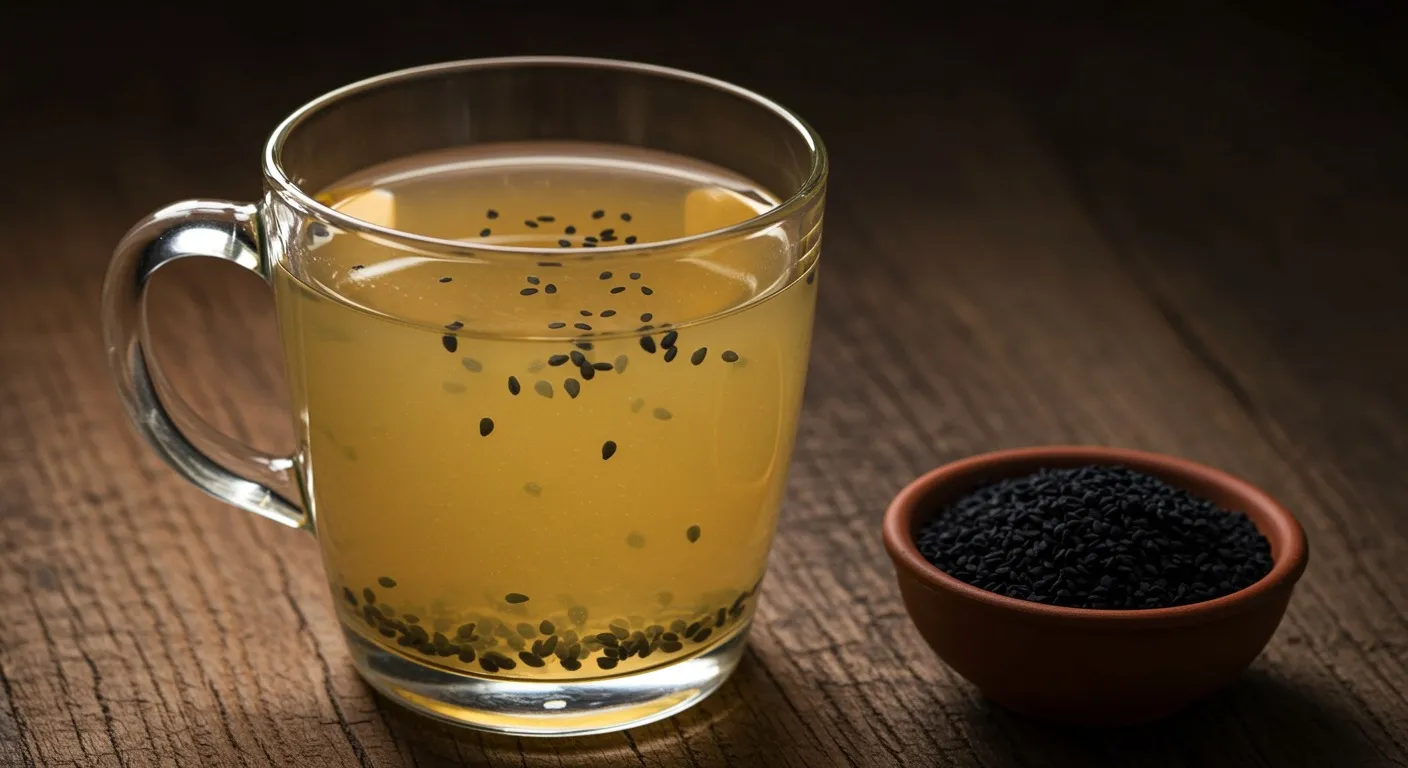
That overfull, heavy feeling after a big meal is something almost everyone knows: a little gas, a bit of bloating, and the sense that your stomach has simply stalled. It usually passes on its own, but a warm digestive drink can make the wait far more comfortable. In many South Asian kitchens, one of the quiet helpers for this is kalonji, the tiny black nigella seeds you might recognize from naan, pickles, and tempered dals. Warmed and steeped in water, they make a simple after-meal sip with a long household reputation for settling the stomach.
The Ayurvedic Perspective
Ayurveda frames everyday indigestion as agnimandya, a weakening of agni or digestive fire, often after heavy, cold, oily, or late meals that aggravate kapha and unsettle vata. Kalonji, known in Sanskrit as krishna jiraka or upakunchika, is treated as a warming, pungent spice with deepana and pachana qualities, meaning it is thought to rekindle appetite and help finish the work of digestion. It has a place in both classical Ayurvedic and Unani household practice as a carminative, used for flatulence, abdominal distension, and that wind-trapped, bloated feeling. Warming the seeds and taking them after food is the traditional way to coax sluggish digestion back into motion.
What Modern Biology Says
Modern analysis shows nigella seeds are rich in thymoquinone, along with carvacrol, thymol, and aromatic volatile oils, compounds with carminative, antispasmodic, and gastroprotective activity in laboratory and animal studies, including reduced stomach acid and more protective mucin. The human evidence is limited and preliminary, but it does exist. A small double-blind randomized trial of a honey-based nigella formulation, taken alongside standard acid-reducing therapy, found a significant easing of symptoms in people with functional dyspepsia. A separate trial that paired nigella seed, at one to three grams a day, with omeprazole was mainly a study of clearing Helicobacter pylori: indigestion symptoms eased to a similar degree in every group, an improvement the researchers credited mostly to the acid-reducer rather than the seeds. So kalonji water is best understood as a gentle traditional aid for mild, occasional complaints rather than a proven cure.
How And When To Use It
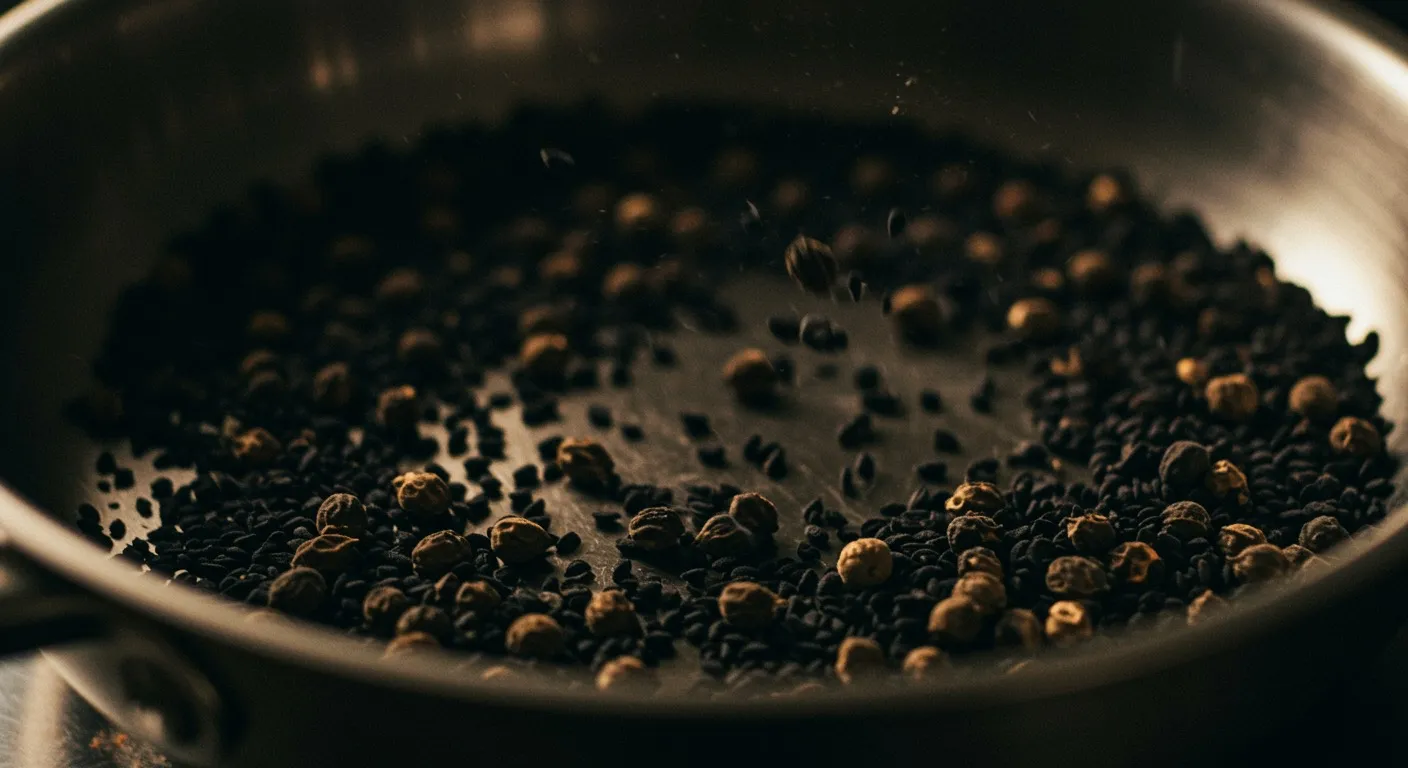
Reach for this when you feel heavy, gassy, or mildly bloated after a meal rather than at the first bite of food. Lightly roasting and crushing about half a teaspoon of seeds before steeping helps release their aromatic oils, and a touch of honey added once the water has cooled to warm makes it pleasant to sip. One cup after a troublesome meal, up to once or twice a day, is plenty; there is no need for large or medicinal doses. Most people simply notice the heaviness easing as the warm drink and the spice do their work.
Cautions And A Note On Medical Care
A few cautions matter. Kalonji can nudge blood sugar and blood pressure downward and has a mild blood-thinning effect in large amounts, so if you take medication for diabetes, blood pressure, or clotting, keep strictly to small culinary amounts and check with your doctor first. Use only kitchen-sized quantities during pregnancy and skip the concentrated oil, and do not give this to infants or young children. If your indigestion keeps coming back, lasts more than a week, or comes with weight loss, vomiting, black stools, or trouble swallowing, see a doctor rather than waiting it out. This is traditional wisdom and not a substitute for medical care, but as an everyday comfort after a heavy meal, a warm cup of kalonji water is an easy one to try.
References
These are the peer-reviewed human studies and reviews behind the modern-evidence claims above. They open in a new tab.
- Mohtashami et al., Journal of Ethnopharmacology, 2015. In 70 functional dyspepsia patients, a honey-based Nigella sativa formulation taken as an adjuvant to standard acid-reducing therapy for 8 weeks significantly lowered dyspepsia severity scores versus placebo; authors called it preliminary and in need of larger studies.
- Salem et al., Saudi Journal of Gastroenterology, 2010. Mainly an H. pylori eradication trial: Nigella sativa at 1, 2, or 3 g/day plus omeprazole; dyspepsia symptoms improved similarly in all arms (credited to omeprazole), and only the 2 g dose matched standard triple therapy for clearing the infection.
Recipe
Kalonji Digestive Water
Lightly roasted kalonji (nigella) seeds steeped in warm water, sipped after a heavy meal to ease mild indigestion, gas, and after-meal heaviness.
- Prep
- 2min
- Cook
- 3min
- Total
- 5min
- Servings
- 1doses
Ingredients
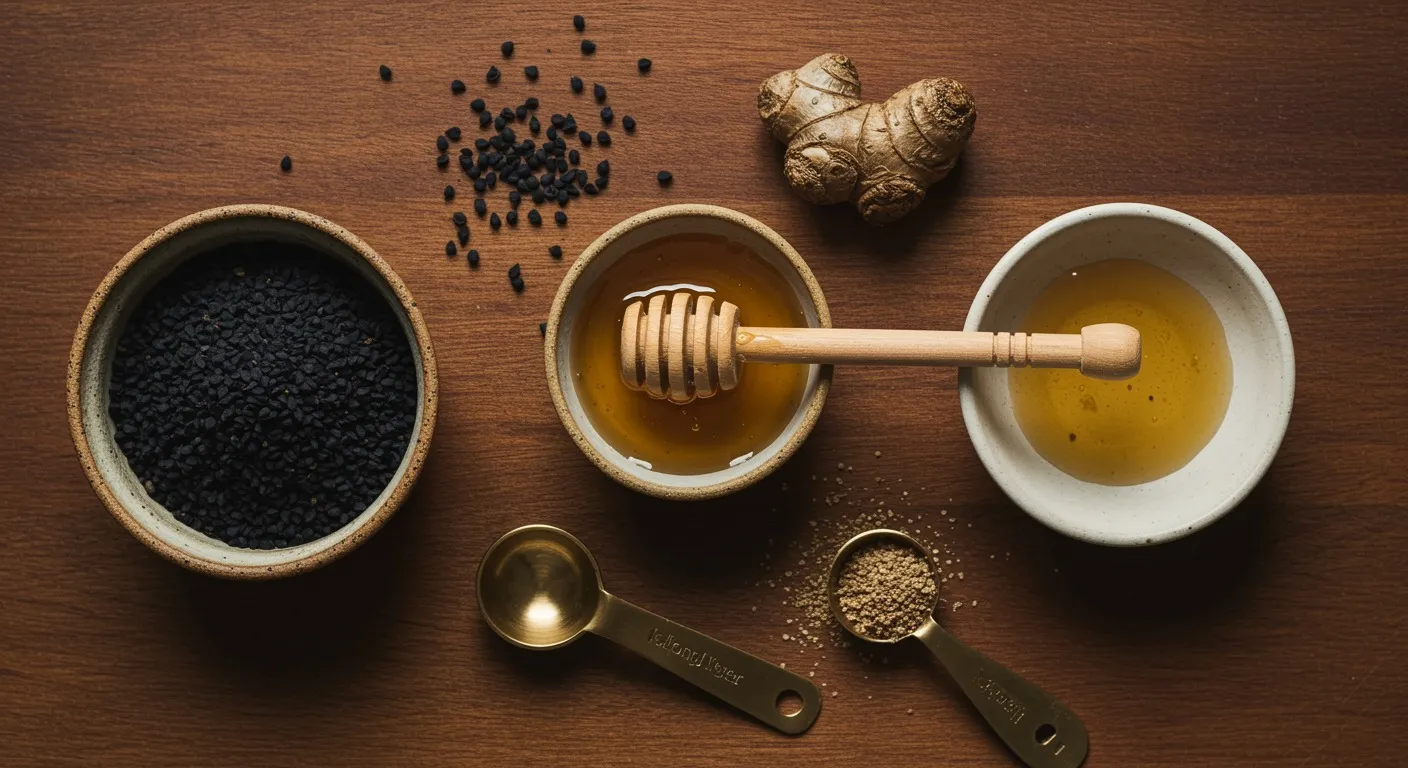
- 1/2 tsp kalonji (nigella seeds)
- 1 cup hot water
- 1 tsp honey, optional, for taste
Instructions
- 1 Add the kalonji seeds to a small dry pan and warm them over low heat for about 30 to 60 seconds, just until fragrant. Do not let them burn.
- 2 Lightly crush the warmed seeds with the back of a spoon or in a small mortar to help release their oils.
- 3 Put the crushed seeds in a cup, pour over the hot water, cover, and let steep for 3 to 5 minutes until comfortably warm.
- 4 Stir in the honey only if you like, once the water is warm rather than scalding. Sip slowly, seeds and all, after a heavy or late meal or when you feel gassy and heavy.
- 5 Use once after a troublesome meal, up to once or twice a day. Keep to small culinary amounts rather than large medicinal doses.
Notes
- Kalonji may lower blood sugar and blood pressure, so use only food-sized amounts and consult your doctor first if you take diabetes or blood pressure medication.
- At high or concentrated doses nigella can have a mild blood-thinning effect, so keep to culinary amounts if you take blood thinners or are near a scheduled surgery.
- Stick to small kitchen quantities; avoid medicinal or concentrated kalonji oil doses during pregnancy, and do not give this remedy to infants or young children.
- Consult your doctor if indigestion, bloating, or stomach pain persists beyond a week, recurs often, or is accompanied by weight loss, vomiting, black stools, or trouble swallowing.
- This is traditional wisdom and not a substitute for medical care.