Easy Poondu Kuzhambu Recipe
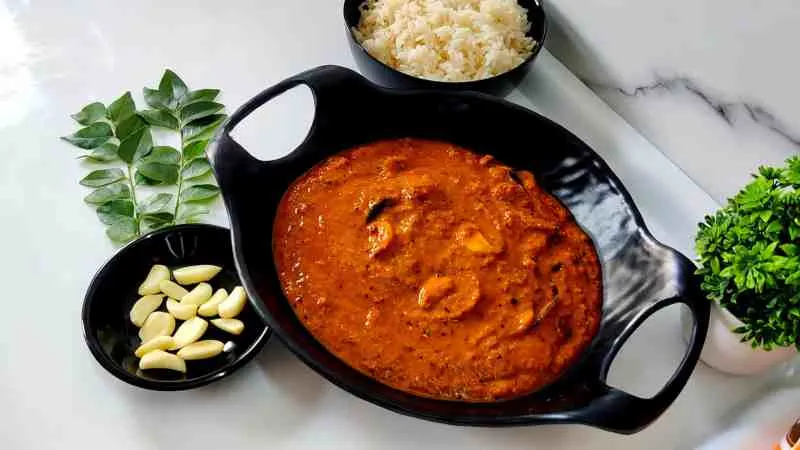
Garlic lovers, where y’all at? Garlic is something that you are either obsessed with or just not a fan. Those who love garlic will look for anything that fills up their kitchens with its spicy, garlicky aroma. This poondu kuzhambu recipe is sure to be your new favorite dish with its delicious garlicky and tangy flavor.
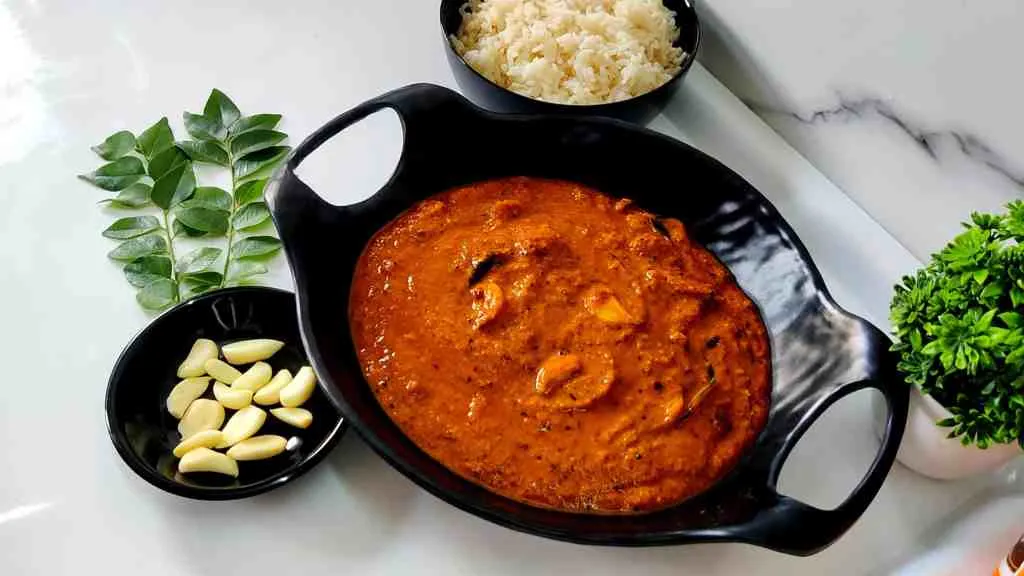
Poondu Kuzhambu recipe
Whether you are a vegetarian who is looking for new vegetarian or vegan recipes or you are just a “garlic person”, today’s recipe is for you. This delicious tamarind and garlic curry is a game changer.
Poondu Kuzhambu, or poondu kulambu, is a healthy tamarind based curry that is made with garlic cloves, curry leaves, small onions or shallots, and tamarind pulp. It is typically made as a main dish or side dish that makes a perfect accompaniment to hot rice and idlis.
What is Poondu Khuzhambu?
Poondu means garlic and kuzhambu is a tamarind based south indian curry style. This poondu kuzhambu recipe, also called poondu kulambu, is a south Indian style tamarind based tangy curry with garlic as a star ingredient. There are many kuzhambu recipes and styles like chettinad style, spicy poondu kuzhambu, or puli kuzhambu etc.
This poondu kuzhambu recipe is by far my favorite kuzhambu recipe and is a common household favorite that fills the whole house with a warm, spicy aroma. So let us see the recipe below for ingredients and the step-by-step pictures with the method for this authentic recipe.
Poondu Kuzhambu Ingredients
Most of the ingredients are commonly found in any South Indian kitchen. However, even if you want to buy them in the US or elsewhere, you can find them easily.
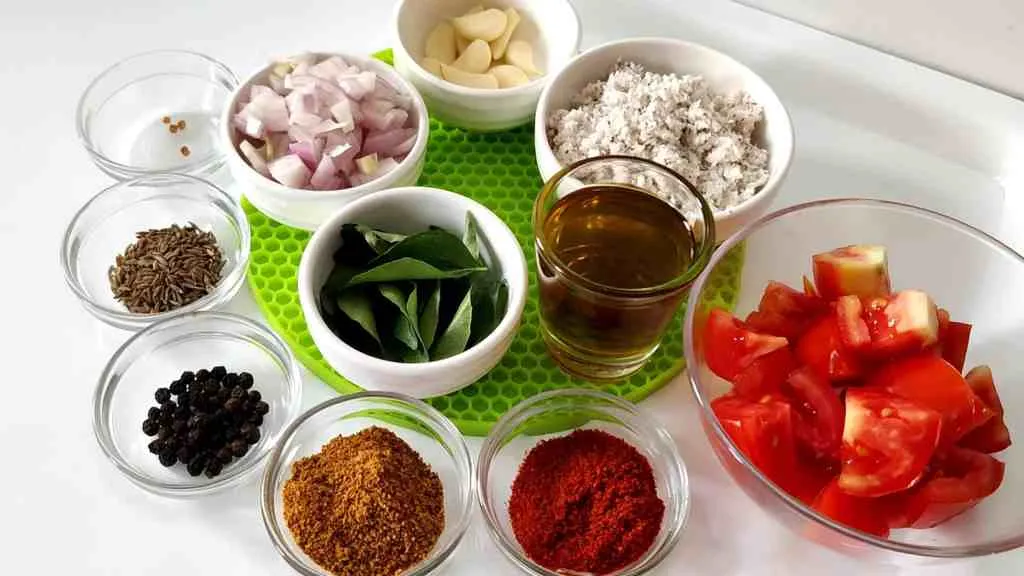
Poondu Kuzhambu Ingredients
Vegetables
Garlic cloves, small onions or shallots, chopped tomato, homemade tamarind paste, grated coconut.
Spices
Fenugreek seeds, mustard seeds, turmeric powder, curry leaves, black pepper, urad dal for tempering, coriander powder, dry red chilies (optional), cumin seeds, asafoetida.
Gingelly Oil or Ghee
Also known as Indian Sesame Oil, this is a slightly darker version of a regular sesame oil. Or you can use ghee, which is my preference.
Kuzhambu Milagai Thool or Kuzhambu Podi
This is a spice mix that is specifically available for poondu kuzhambu. It is easily available in South Indian stores. However, if you cannot find it, you can replace it with homemade sambar powder or any sambar powder that is available.
Jaggery
This is added in the end for a touch of sweetness, but it enhances the overall tangy flavor.
Cooking Directions for Poondu Kuzhambu
This garlic curry recipe is simple, but it takes some time to cook. The results are worth waiting for, as you get a delicious tangy and savory dish at the end.
For Masala
Take two small to medium heads of garlic and peel the garlic cloves. It is ok to crush them to get the husks off, but do not slice them. Put these cloves aside for now.
Heat a pan and add a generous drizzle of gingelly oil or ghee. When the gingelly oil is hot enough, add fenugreek seeds. Do not add more than recommended as it gives a bitter taste. Then add cumin seeds and black pepper.
Let the spices crackle and get fragrant, then add the 8-10 peeled cloves of garlic. Sauté the garlic until it is golden brown.
Add a sprig of curry leaves, roughly chopped small onions, and tomatoes and fry for a minute.
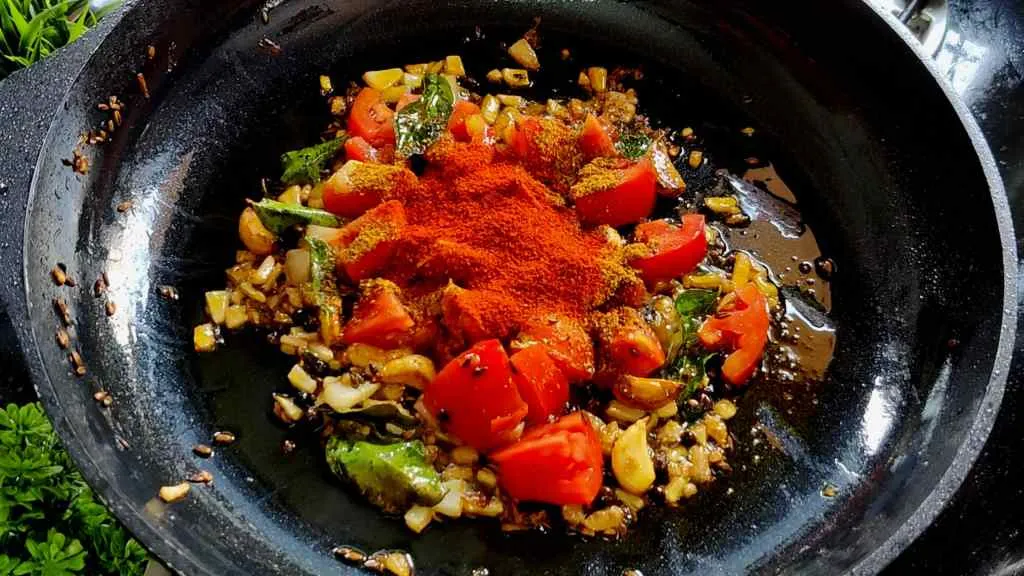
Sauté Ingredients
Then add the kuzhambu milagai thool or sambar powder and mix it.
Add grated coconut, give it a quick mix, and remove from the heat.
Once the mixture has cooled, grind the masala to a smooth paste by adding a little water. Put this mixture aside.
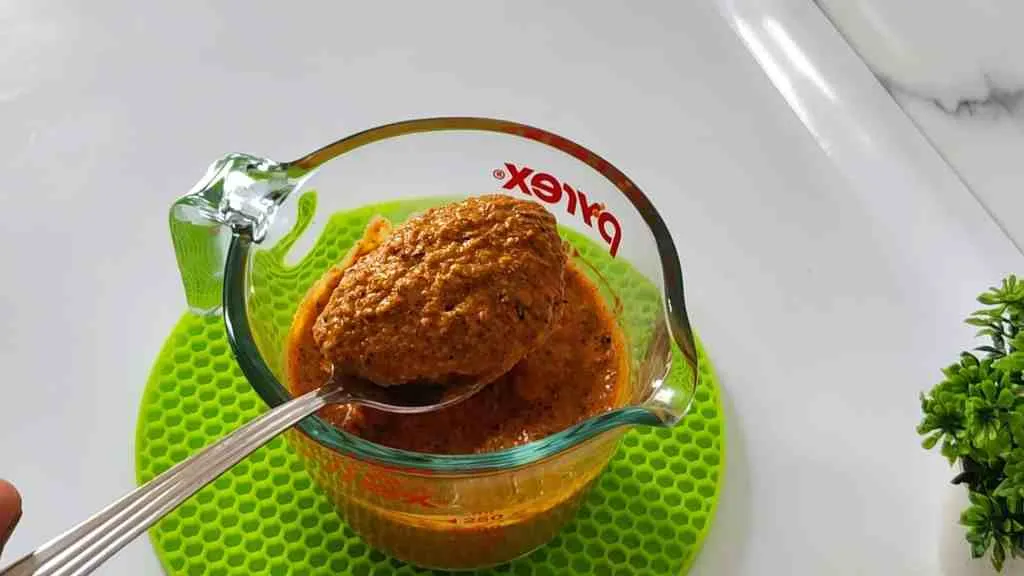
Ground Masala
Tamarind Paste
Take a tamarind ball of walnut to lime size and soak it in a cup of hot water.
After half an hour, deseed the tamarind balls and crush it to a pulp with your hands or a fork.
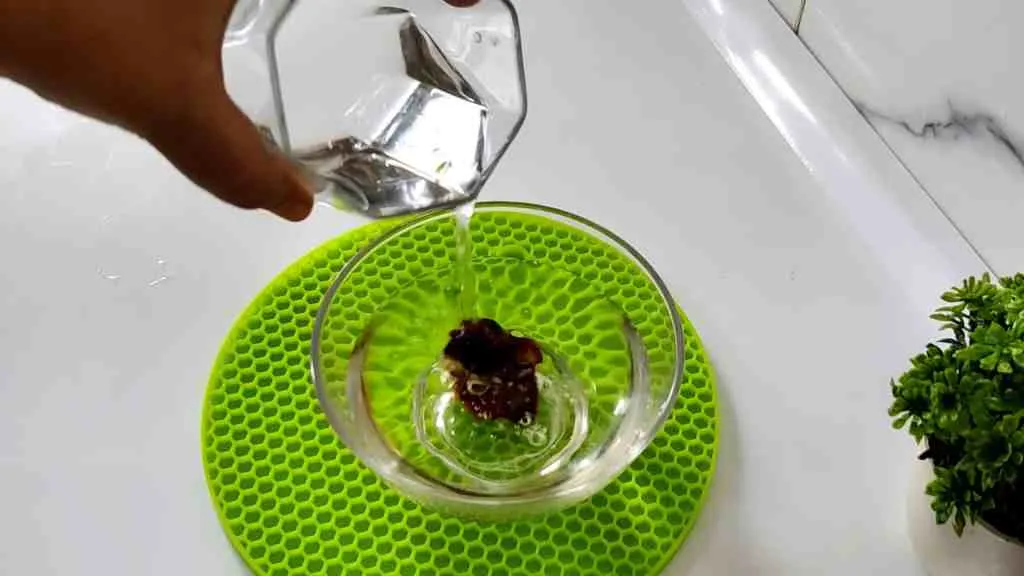
Make Tamarind Paste
Pull any extra seeds and fiber out**,** and keep the tamarind extract and pulp.
Putting it All Together
Now add gingelly oil or ghee in a wok and add mustard seeds and urad dal to it and let it splutter.
Add two whole pods of peeled garlic to the gingelly oil and fry for a minute.
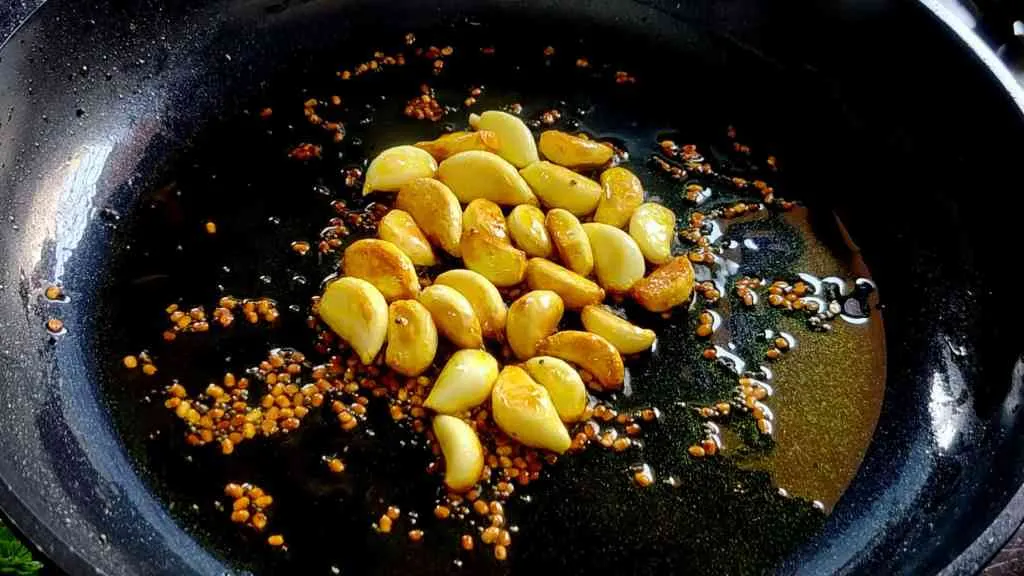
Sauté Garlic
Then add three sprigs of curry leaves to the mix. It gives a very distinct flavor. Be generous with the amount of curry leaves here.
Add onions and mix.
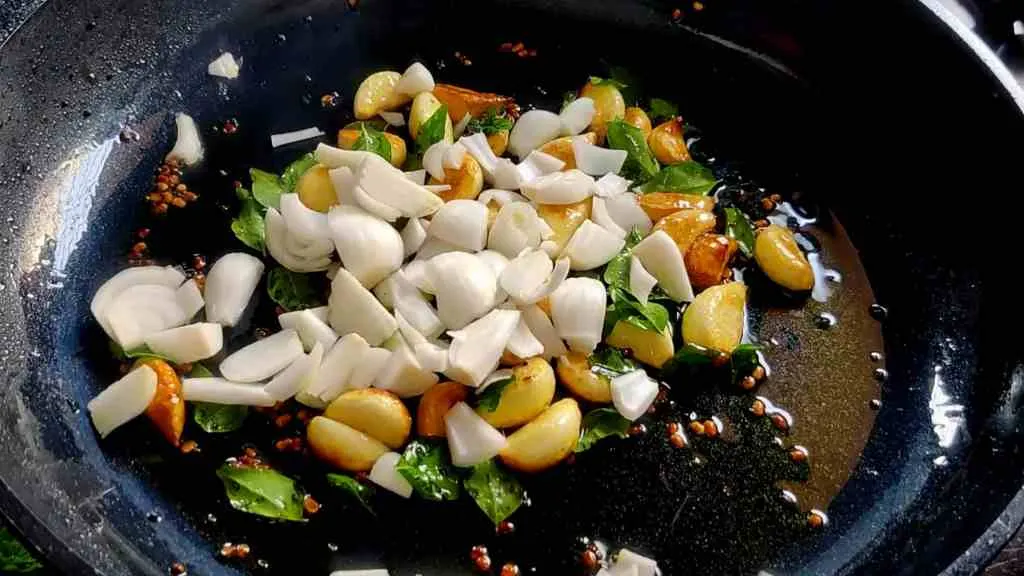
Saute Onions
Mix in the tamarind water and pulp, asafoetida (skip for gluten-free), turmeric, and coriander powder.
Now add the poondu kuzhambu masala to it and the amount of water you need to make it a thinner gravy consistency. It will thicken a bit as it cooks.
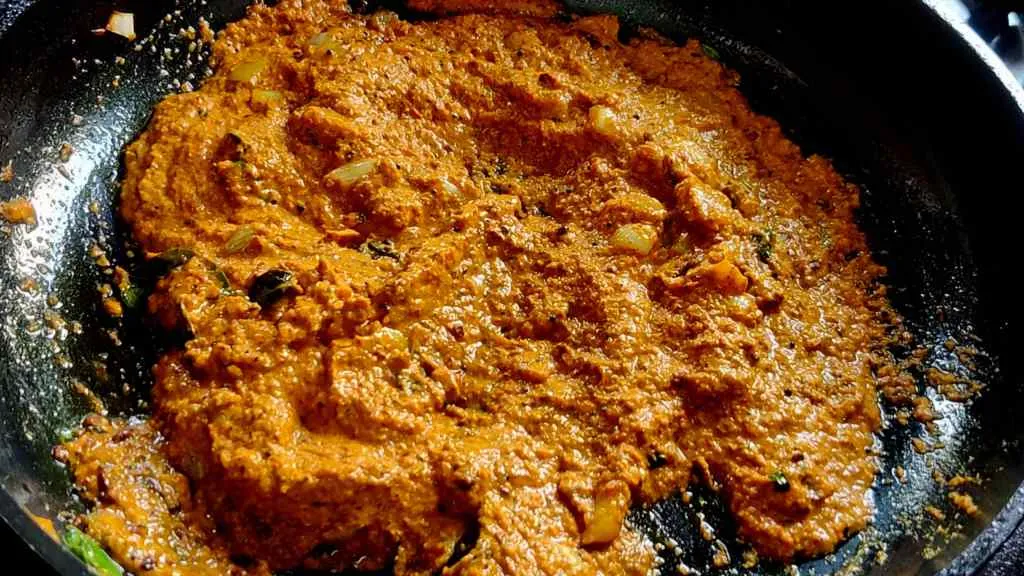
Add Masala
Stir it well and cover with a lid and simmer for 30-40 minutes, keep stirring every 10 minutes to avoid burning at the bottom.
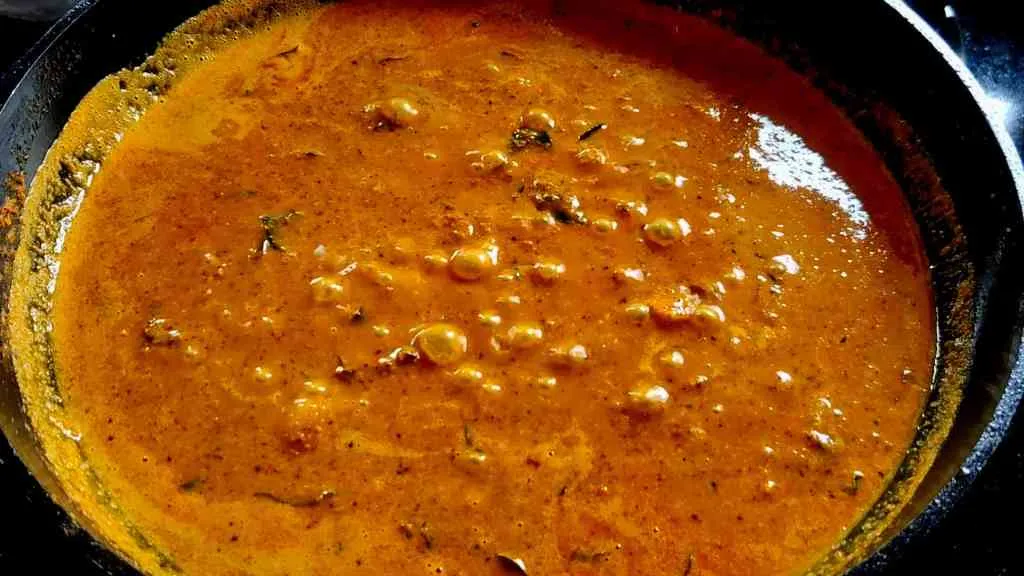
Simmer Ingredients
In the end, add a little jaggery which is the secret to a good poondu kuzhambu. Jaggery gives a special kick and flavor to the dish. After adding jaggery, let it simmer for five minutes on low heat.
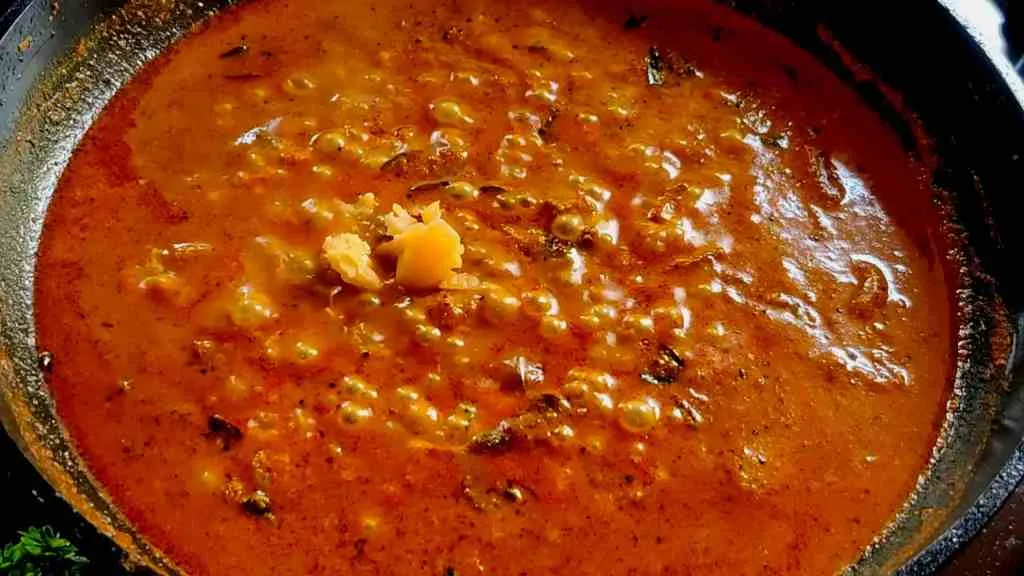
Add Jaggery
The end result is a spicy, tangy and a little bit sweet curry that goes perfectly with hot steamed rice.
Serving
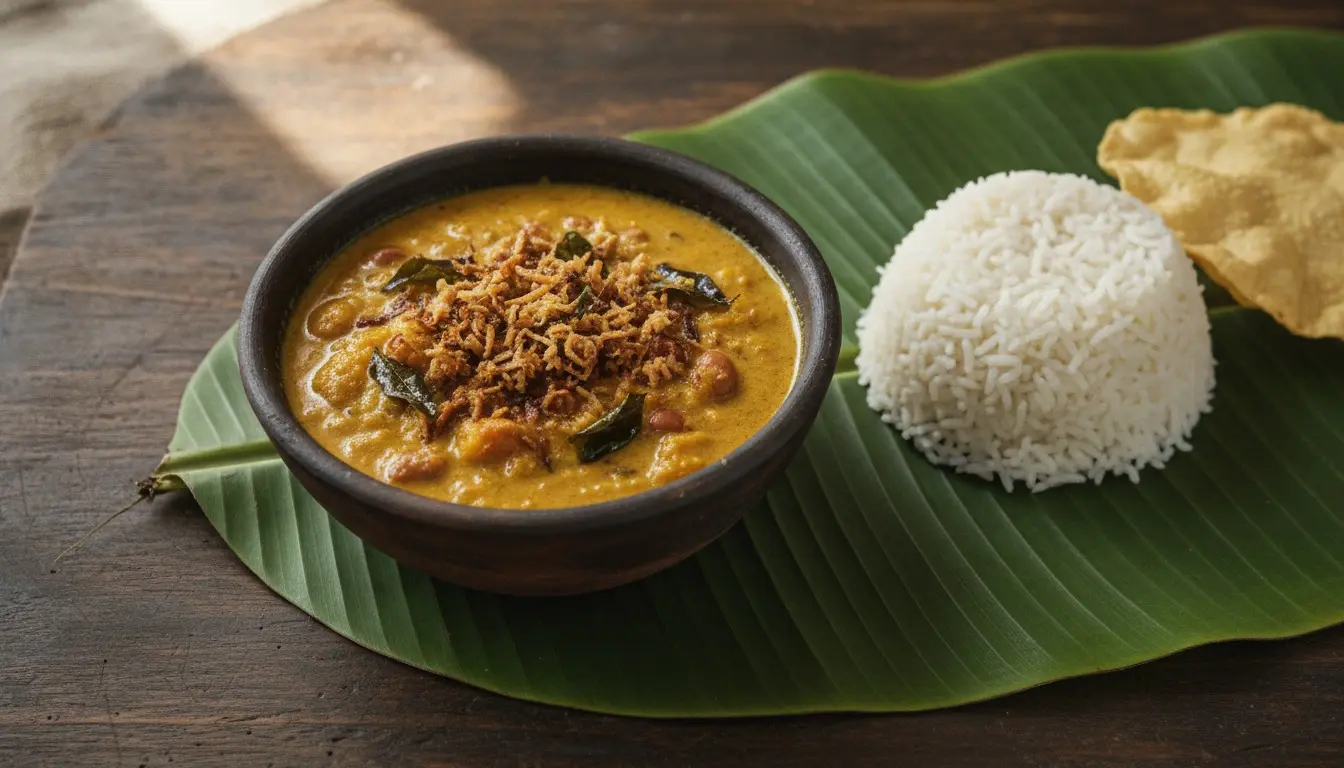
Serve this poondu kuzhambu recipe with traditional steamed rice on a banana leaf with lots of love and colorful chutneys, or enjoy it as a comfort food with your favorite TV show. Remember, the best ingredient you can add in this or any other dish is your passion for good food.
Fun Fact
By some inexplicable, almost supernatural phenomenon, the garlic gods smile brighter the second day and so this tasty garlic curry tastes even tastier the second day as compared to a fresh poondu kuzhambu.
FAQs
What is the difference between Vatha Kuzhambu and Kara Kuzhambu?
Both are kuzhambus made with a base of tamarind, but Vatha Kuzhambu is made with dried vegetables and Kara Kuzhambu is usually made with drumstick (green moringa seed pods) and eggplant
What is Poondu?
Poondu means garlic in Tamil.
What is the difference between Kuzhambu and Sambar?
Kuzhambu and Sambar are both tamarind based south Indian curries, but Sambar contains toor dal which gives it a distinct texture and flavor.
Recipe
**Easy Poondu Kuzhambu Recipe**
Poondu Kuzhambu, or poondu kulambu, is a healthy curry that is made with garlic cloves, curry leaves, small onions or shallots, and tamarind pulp. It is typically made as a main dish or side dish that makes a perfect accompaniment to hot rice and idlis.
- Prep
- 30min
- Cook
- 30min
- Total
- 70min
- Servings
- 4servings
- Calories
- 300kcal
Ingredients
- Masala
- 1 tbsp gingelly oil or ghee
- 4 pieces fenugreek seeds
- 1 tsp cumin seeds
- 1 tsp black peppercorns.
- 2-3 dried red chilies
- 8-10 cloves of peeled garlic cloves
- A sprig of curry leaves
- 1 medium sized, chopped onion.
- 2 roughly chopped ripe tomatoes
- 1 tsp to 1 tbsp of kuzhambu milagai thool or sambar powder (adjust the spice level)
- 1/4 cup fresh grated coconut
- Main Ingredients
- A ball of tamarind (walnut or small lime size) or 1 tbsp tamarind concentrate
- 2 tablespoons gingelly oil or ghee
- 1 teaspoon urad dal
- 1/4 teaspoon mustard seeds
- 2 heads of peeled garlic cloves
- 3 sprigs of curry leaves
- 10 chopped Indian shallots or 1 small-medium onion
- Salt to taste
- A pinch of asafoetida (leave out for gluten-free recipes)
- 1/2 teaspoon turmeric powder
- 1 tablespoon coriander powder
- 1 tablespoon jaggery
Instructions
- Masala
- 1 In a wok or pan, add some gingelly oil or ghee and when it is hot, add 3-4 fenugreek seeds.
- 2 Add in cumin seeds and black pepper and let it splutter.
- 3 Now add 8-10 cloves of garlic and fry it until it is golden brown.
- 4 Add a sprig of curry leaves, and roughly chopped onions. Sauté until the onions are soft.
- 5 Toss in the tomatoes and fry for a minute and add kuzhambu milagai thool or sambar powder.
- 6 Now add grated coconut and take it off heat.
- 7 Grind this masala to a smooth paste and keep it aside.
- Tamarind
- 8 Now make homemade tamarind pulp, with a walnut to lime sized tamarind hunk. Soak it and then deseed and strain it. Alternatively, you can use 1 tbsp of tamarind concentrate dissolved in hot water.
- Putting it All Together
- 9 Now add some gingelly oil or ghee in a wok and add mustard seeds and urad dal. Let it splutter and add two whole pods of peeled garlic. Fry it for a minute.
- 10 Now add three sprigs of curry leaves, then add onions, tamarind water and pulp, asafoetida (skip for gluten-free), salt, turmeric and coriander powder.
- 11 Add in the ground masala and additional water as needed to make a thin to medium thickness gravy.
- 12 Now cover and cook on low heat for 30-40 minutes.
- 13 Keep stirring in between to avoid burning at the bottom.
- 14 Then add grated jaggery and let it simmer for 5 minutes.
- 15 Turn off the heat and your garlic curry is ready.
- 16 The consistency of the final dish should be based on your preference. I like mine a little thicker, but it is traditionally a thinner gravy.